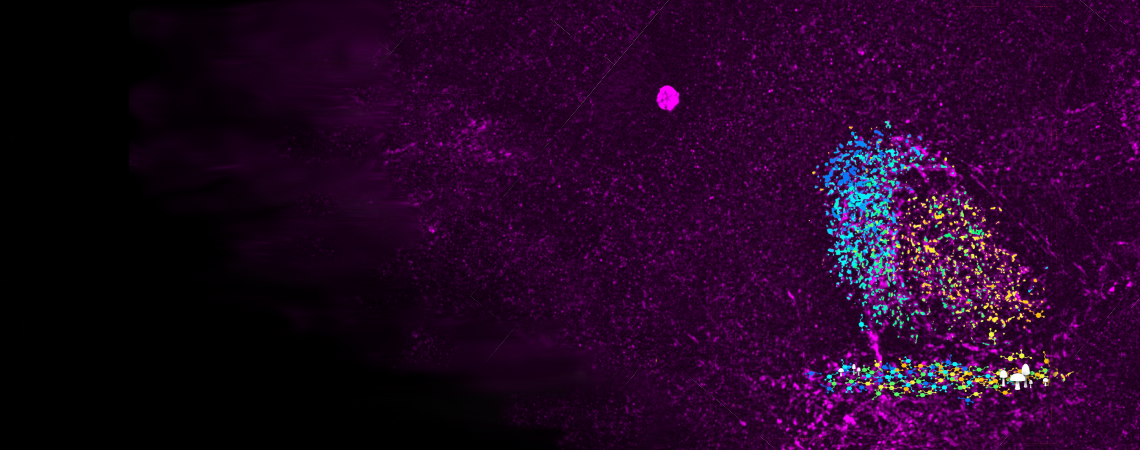
Learning and memory is the fundamental process through which information is encoded, stored, and retrieved from the nervous system. Decades of research have revealed hundreds of genes that are required for an organism to learn and remember normally. However, the flip side of the coin, the genes that work in opposition to constrain learning and memory processes, are surprisingly less well known and studied. What are these “memory suppressor genes” and how do they limit learning and memory? More intriguingly, why do such constraints exist in our central nervous system? These are the questions we are currently studying in the Phan lab.
Relevance to Human Disorders
Studying genes that limit memory processes and learning how to manipulate these constraints may lead to new strategies to treat developmental or degenerative nervous system disorders such as dementia. Stromalin is a memory suppressor gene that we have studied in flies, which is relevant to a developmental disorder in humans known as cohesionopathies. We are also testing whether our manipulations of synaptic vesicle numbers in dopamine neurons can relieve Parkinson’s disease symptoms in the flies.
Drosophila is a powerful model organism
We use the powerful and adaptable Drosophila melanogaster (fruit fly) genetic model organism for our research. Approximately 75% of genes that cause diseases in humans also exist in the Drosophila genome. The vast libraries of genetic tools available for Drosophila research combined with their short life cycle and large number of progeny make this organism one of the easiest to genetically manipulate. These properties allow us to make conceptual scientific advancements at a rapid pace.