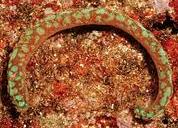
(aplacophoran) |
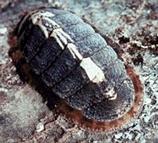
(polyplacophoran) |
PHYLUM MOLLUSCA
(Tree and traits from
|
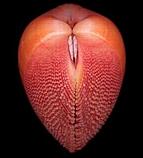
(heterodont bivalve) |
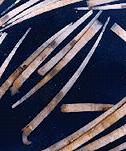
(scaphopods) |
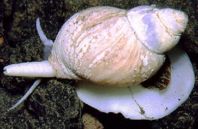
(prosobranch gastropod) |
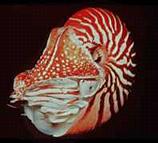
(nautiloid cephalopod) |
|
(aplacophoran) |
(polyplacophoran) |
PHYLUM MOLLUSCA
(Tree and traits from
|
(heterodont bivalve) |
(scaphopods) |
|
(prosobranch gastropod) |
(nautiloid cephalopod) |
       ======2================== Aplacophora (shell-less, worm-like molluscs)
       |
<<=1===|    ====4=============== Polyplacophora (chitons)
       |    |
       ==3==|   ====6=========== Monoplacophora (primitive limpet-like molluscs)
            |   |
            =5==|         ===9== Gastropoda (snails, slugs, etc.)
                |    ==8==|
                |    |    ==10== Cephalopoda (nautiloids, cuttlefish, squids, octopus)
                ==7==|
 5="CONCHIFERA"      |    ==12== Bivalvia (mussels, clams, scallops, etc.)
                     ==11=|
                          ==13== Scaphopoda (tusk shells)
Back to Zool 250 tree for animal phyla or Protostomia
|
b) mantle with calcareous spicules produced by single cells, c) ventrolateral mantle cavity with multiple bipectinate gills (ctenidia) d) radula e) larval/adult body with traces of eight segments f) trochophore larvae** g) coelom via schizocoely** h) 'open' circulatory system (hemocoel) with pumping heart i) circumpharyngeal nerve-ring (brain) with ladder-like ventrolateral nerves** b) reduction/loss of foot & head c) reduced number of ctenidia (two or fewer) b) one or more dorsal, solid shell plates c) 8 pair pedal 'retractor' muscles d) mobile radular membrane & odontophore b) mantle girdle c) calcareous spicules from single cells** b) 3-lobed mangle margin c) 3-layered shell (periostracum, prismatic & nacreous calcareous layers) d) crystalline style e) diplosome lost (2001 Invert. Biol. 120:342) b) 5 - 6 pairs of monopectinate ctenidia b) 1 or 2 pair ctenidia c) veliger larva (absent in Cephalopoda) |
b) dorsoventrally expanded body with large, dorsal viscera c) 1 pair pedal retractor muscles d) posterior mantle cavity b) operculum attached to foot c) 1 pair ctenidia** b) shell with gas-filled chambers & siphuncle c) ink gland d) beak-like jaws e) large, circumoral tentacles/arms f) 'closed' circulatory system (vessels lined by epithelium) g) image-forming eyes & large brain h) active predators; crystalline style lost i) large, yolky eggs; direct development (no larva) b) burrowing foot c) paired, lateral larval shell plates d) 1 pair ctenidia** b) head lost c) enlarged mantle cavity & ctenidia d) mantle edge fused to shell e) byssal gland b) ctenidia lost c) captacula |